By Abdulbasit Oladejo Ololade
The Jalsa Salana Clinic stands as a shining example of Islamic values in action, providing free medical care and health services to attendees. This selfless effort embodies the principles of compassion, empathy, and kindness, fostering a holistic experience that nurtures both body and soul.
A Conversation with Pharm. Taoheed Adeoye Abimbola
The Media Content team had the privilege of sitting down with Pharm. Taoheed Adeoye Abimbola, Vice President of Ahmadiyya Medical Assembly and Naib Nazim Jalsa Clinic. He shared valuable insights into the clinic’s operations, challenges, and triumphs.
The Clinic’s Structure and Services
The Jalsa Clinic comprises five distinct units, each playing a vital role in providing comprehensive care:
- Clinicals: Staffed by registered Ahmadi doctors, this unit offers expert consultation and diagnosis services. Attendees receive personalized attention, guidance, and treatment, addressing their unique health concerns.
- Laboratory: Equipped with modern facilities, the laboratory conducts various medical tests, enabling healthcare professionals to diagnose and manage conditions effectively. This unit plays a critical role in identifying and addressing health issues promptly.
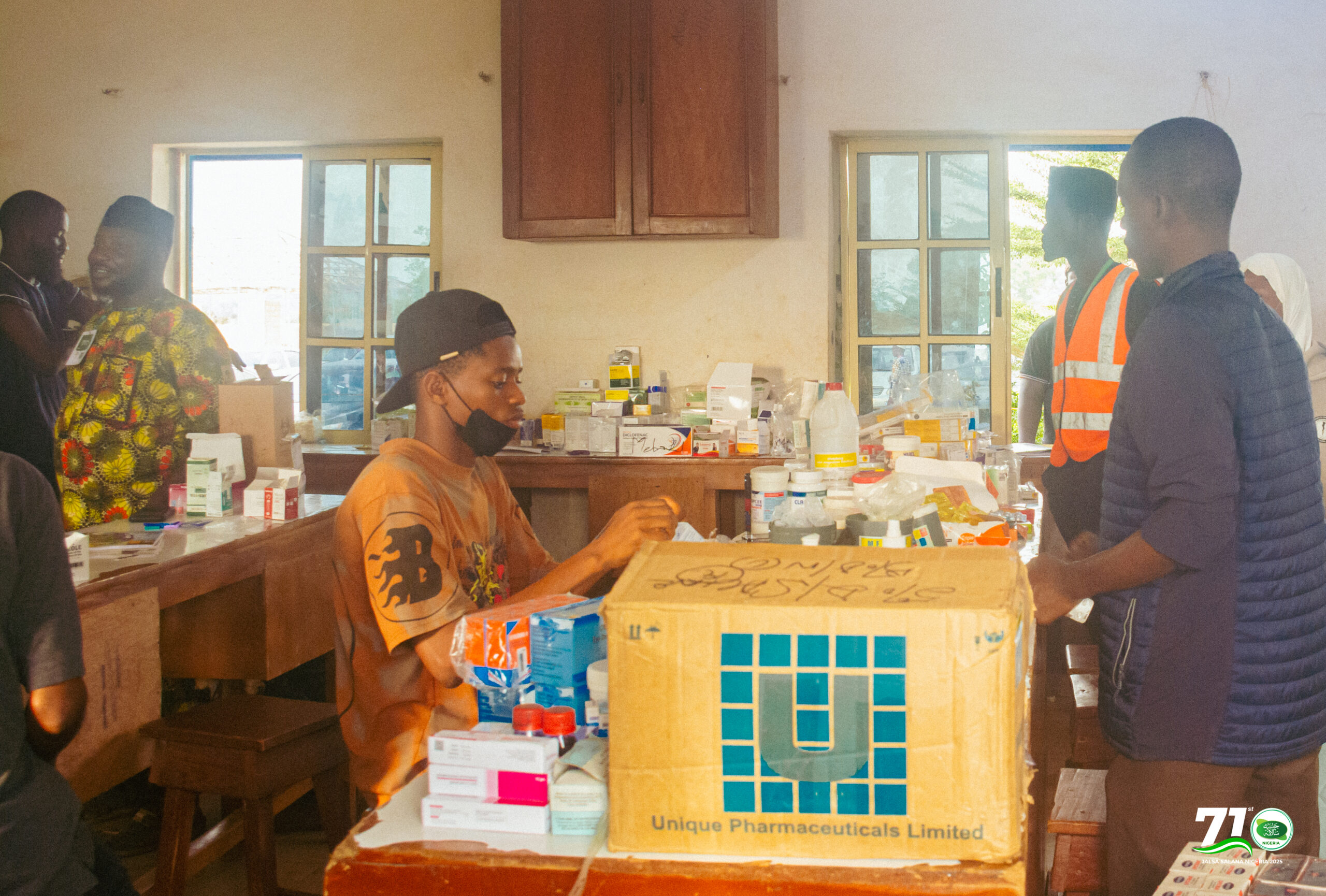
- Pharmacy: The pharmacy dispenses medications according to prescriptions from medical doctors, ensuring attendees receive necessary treatments. This unit is staffed by experienced pharmacists who provide guidance on medication usage and potential interactions.
- Nursing: The nursing unit offers comprehensive care, addressing attendees’ nursing needs and providing support during their stay. Skilled nurses provide emotional support, administer medications, and monitor patients’ progress.
- Medical Records: This unit manages data, maintaining accurate records of medical activities, practitioner and volunteer participation, and providing valuable insights for future improvements. This information helps refine clinic operations, ensuring attendees receive optimal care.
Challenges and Solutions
Pharm. Abimbola highlighted several challenges the clinic faces:
- Pregnant women attending Jalsa despite health risks: Despite advisories, some pregnant women attend Jalsa, posing health risks. The clinic takes extra precautions to ensure their well-being.
- Funding constraints: The clinic relies on donations and support from Jama’at’s administrative setup. Funding limitations can impact equipment purchases and staffing.
- Equipment limitations: The clinic sometimes lacks specialized equipment, requiring referrals to nearby hospitals.
Despite these challenges, the clinic perseveres, relying on Allah’s grace and Jama’at’s support. For this year’s Jalsa, over 120 medical professionals and volunteers registered to serve, including:
- 35 Medical Doctors
- 60 Nurses
- 12 Pharmacists
- 12 Medical Laboratory Scientists
- 1 Health Records Clerk
The Power of Volunteerism
The Jalsa Clinic’s success hinges on the selfless dedication of its volunteers. Medical professionals and support staff from diverse backgrounds come together, united by their commitment to serving humanity. Their tireless efforts create a welcoming environment, putting attendees at ease.
The Jalsa Clinic’s impact extends beyond physical health. By providing emotional support, spiritual guidance, and a sense of community, the clinic fosters a holistic experience. Attendees leave with renewed spirits, grateful for the care and compassion they received.
The Jalsa Salana Clinic embodies the true spirit of Islam, demonstrating compassion, empathy, and kindness. As a beacon of hope, it inspires us to strive for excellence in serving humanity. May Allah continue to bless this noble endeavor, guiding us toward a future filled with love, care, and compassion.